
What Is Intelligent Automation?
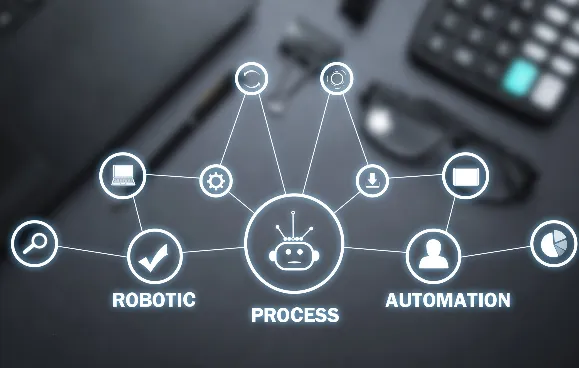
Lets get straight to it. Intelligent Automation (IA) is what you get when you combine Robotic Process Automation (RPA) with Artificial Intelligence (AI). It makes software go from being a rule-follower to a smart problem-solver.
What Is Intelligent Automation Really?
Think of it like this: You have a worker that's great at repetitive jobs like copying data from a spreadsheet into your accounting software. That's automation (RPA) in a nutshell. It's fast and accurate. It can't handle unexpected things.
Now lets give that worker a brain. That's automation.
With AI as its brain this digital assistant can handle real-world situations. It can read an invoice figure out what it's for and decide who needs to approve it. Of following a script IA learns from new information and handles exceptions on its own.
To really get a feel for this
It helps to start by understanding workflow automation, which's the foundation of these smarter systems.
From Rule-Follower to Problem-Solver
The leap here is from just doing tasks to thinking and doing them. Traditional automation is perfect for work.. Most business processes are messy and full of unstructured data. Intelligent automation is built to thrive in that chaos.
"Intelligent Automation doesn't just mimic actions; it mimics human judgment. It elevates a process from a sequence of steps to a workflow capable of self-correction and improvement."
This shift isn't a cool concept; its driving serious growth
The global intelligent automation market was valued at $10.6 billion in 2021 and is on track to hit nearly $17.95 billion by 2025. This growth shows that companies are moving past task-bots and building smarter operations. Book A Call
Rule-Follower vs Problem-Solver

As you can see the difference is huge. We're talking about a system that can tackle challenges from analyzing customer feedback to spotting fraud patterns.
By bringing RPA and AI
Businesses unlock a new level of efficiency.
The end result is a system that delivers:
* Adaptability: It can adjust to information and changes in your workflow.
* Insight Generation: It analyzes data to find trends and suggest improvements.
* End-to-End Process Management: It can manage a workflow from start to finish.
The Three Engines Driving Intelligent Automation
It's not one piece of tech; it's a team of three distinct engines working together. Think of it like a high-performance car: each part has a job.
The first engine is Robotic Process Automation (RPA). This is the 'hands of the operation. RPA does structured tasks with accuracy and speed.
Next up is Artificial Intelligence (AI) which acts as the 'brain'. AI brings the ability to think, learn and adapt.
The final engine is Process Intelligence, which serves as the 'eyes of the system. This part analyzes workflows gathers data and finds opportunities to improve.
The Power of Synergy
These three components create a self-improving loop.

How The Engines Work Together
Lets walk through automating invoice processing.
RPA Executes the Task: An RPA bot watches an email inbox for invoices.
AI Provides the Intelligence: The AI engine uses technologies like Natural Language Processing (NLP) and Optical Character Recognition (OCR) to read the invoice.
AI Makes a Judgment: The AI checks this information against your purchasing system.
Process Intelligence Optimizes the Workflow: The process intelligence engine collects data in the background.
How Intelligent Automation Redefines Business Efficiency
So we've covered the tech behind automation. The real magic happens when you see the shifts. It’s not about doing things faster; it’s about building a smarter company.
Think about an accounts payable department. Every single invoice is different. A person has to find the PO number match it to a delivery record and then type everything into the accounting software.
Now imagine that workflow with intelligent automation. An IA tool can look at any invoice instantly pull out the data check it against your records and only flag exceptions that need a human.
Slashing Costs and Boosting Accuracy
The financial upside is significant. By handing over tasks to software you immediately cut down on human hours needed for basic operations.
Companies using this kind of automation see an average of 22% reduction in costs. Even a single component like Robotic Process Automation (RPA) can deliver a return on investment between 30% and 200% in its year.

Empowering Your Human Workforce
When you free people from tasks they can focus on work that requires a human touch.
Of replacing people intelligent automation elevates them. It turns data entry clerks into data analysts and customer service reps into relationship managers.
This change can create an engaged and creative work environment. Your team can dedicate their talent to:
Strategic Problem-Solving: Looking at the picture and spotting new opportunities, for growth.
Creative Innovation: Brainstorming products or figuring out better ways to get things done.
Customer Relationships: Giving customers personalized attention that builds loyalty.
Intelligent Automation In The Real World
Theory is great. Seeing how intelligent automation actually works in everyday life is exciting. This isn't a concept; it's technology that's already solving tough business problems and delivering real results.
Lets look at some stories of IA in action.
Fortifying Finance Against Fraud
Banks and financial institutions constantly fight against fraud. One major bank struggled to keep up with criminals using schemes to steal funds. Human analysts were great. They could only review a few transactions each day often missing signs of a coordinated attack.
The Problem: Manual fraud detection was a game due to the high volume and speed of transactions. Analysts were overwhelmed with data. The bank was losing money.
The IA Solution: The bank used an automation system that monitored thousands of transactions per second spotting unusual patterns that strayed from a customers normal behavior. It connected activities across accounts to expose complex fraud attempts.
The Outcome: The system flagged and froze transactions accurately alerting human experts to investigate. This slashed losses by millions and freed up the fraud team to hunt for new threats.
Transforming Patient Care In Healthcare
In healthcare every minute spent on paperwork is a minute not spent with patients. A large hospital network felt this pain. Staff were bogged down by data entry, insurance checks and juggling patient records.
The Problem: Repetitive admin work created bottlenecks slowing down patient intake delaying billing and leading to staff burnout.
The IA Solution: The hospital implemented an IA platform to automate workflows. The system used Optical Character Recognition (OCR) to read forms and insurance cards then verified coverage in real-time.
The Outcome: The patient check-in process is now faster and more accurate. Nurses and admin staff can focus on interacting with patients and providing quality care. The billing cycle shortened, improving the hospitals cash flow.
Intelligent automation changes what a job looks like. It empowers professionals to focus on tasks that truly matter whether that's outsmarting criminals or caring for patients.
Optimizing The Retail Supply Chain
For retailers knowing what customers will buy is key. One large retail chain struggled with forecasting ending up with products or running out of popular items. Their old methods relied on past sales data.
The Problem: Guessing wrong on customer demand was costly leading to inventory management issues and missed revenue.
The IA Solution: The retailer adopted an IA platform that analyzed a range of data including social media trends, competitor pricing and economic indicators. The AI engine created demand predictions for thousands of products.
The Outcome: The retailers ability to have the product on the shelf improved dramatically. They reduced overstock and out-of-stock situations leading to sales and healthier profit margins.
Intelligent Automation Use Cases Across Industries
Intelligent automation isn't a one-size-fits-all solution; it's a flexible toolkit that can solve specific problems in almost any business environment.

Your First Steps Into Intelligent Automation
Getting started with automation doesn't have to be overwhelming. Pick one area to focus on and start small. A step-by-step approach builds momentum. Proves the value of the investment.
Find Your Perfect Starting Point
Look for tasks that drain your teams energy and are waiting for a solution. A great candidate for your project usually involves:
A rule-based core
Volume and repetitive work
Prone to human error
Involves unstructured data

Launch a Focused Pilot Project
Launch a small pilot project that delivers a quick win. A successful pilot shows the value of the technology gives your team a low-risk way to learn and provides a return on investment.
Choose the Right Partners and Technology
Find a partner who understands your business and can help you get moving. A good partner will help you map your process select the tools and manage implementation.
Lead the Human Side of Change
Intelligent automation is about people as much as it is about technology. Be transparent communicate clearly and get your team involved in the process. Frame this tool, as a powerful assistant that enhances your teams abilities.
This is not about using terms. It's about giving you answers so you can see where Intelligent Automation fits, what it means for your team and how realistic it is for your company.
Is Intelligent Automation the same as Artificial Intelligence?
Not exactly,. They work well together. Think of Artificial Intelligence as the brain it's what helps learn, reason and make sense of information. Intelligent Automation is the system that uses that brain to solve a real business problem.
Intelligent Automation combines the "brain" of Artificial Intelligence with the "hands" of Robotic Process Automation. This allows a system to not do a task but to do it smartly. So while Artificial Intelligence provides the thinking power Intelligent Automation is the package that applies that thinking to get work done.
Will Intelligent Automation Replace Our Team?
This is a worry but its based on a myth. The real goal is to make your team better not to replace them. Intelligent Automation is great at handling tasks that drain energy and lead to burnout.
By handing over data entry or routine checks you free up your team to think critically solve problems and build relationships with customers. It's about shifting their focus from work to high-value work.
Some projections show that while automation may displace jobs it will also create roles. This results in a gain of jobs globally highlighting a shift in job functions rather than a reduction.
This is not about being efficient; it's about making work more meaningful. Many fears around Artificial Intelligence are based on ideas.
Is This Technology for Big Companies?
No that's not true anymore. Todays Intelligent Automation platforms are affordable, easy to use and designed to scale. You don't need a budget to get started.
Any business with processes that require judgment or deal with unstructured data is a great candidate. We see it in industries:
Finance: Processing invoices and expense reports automatically.
Healthcare: Speeding up patient intake and insurance checks.
Retail: Keeping inventory answering customer queries instantly.
Manufacturing: Using sensors to predict when a machine needs maintenance.
If you want to get more done without increasing your payroll reduce errors and grow your business smoothly Intelligent Automation is an option for you no matter your company's size.
How Hard Is It to Implement?
It's more manageable than you think especially if you start small. The key is to focus on one problem at a time. A pilot project solving a problem can often be up and running in a few weeks. This gives you a win and proves the value right away.
A full-scale rollout requires planning.. The most successful projects start small and build momentum from there.
Despite the benefits it's essential to approach implementation. Industry data shows that many digital transformation projects fail due to planning.
To avoid being a statistic start with a plan. Pick the process to automate first get your team involved and be clear on what business goal you're trying to achieve. That's how you build a foundation for success that can spread across your company. Book A Call
Ready to explore how Intelligent Automation can benefit your business? Our team specializes in creating custom Artificial Intelligence and automation solutions, for medium-sized businesses. We can help you identify the starting point and build a system that delivers real results. Learn more about our services and book a consultation today.